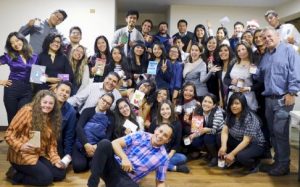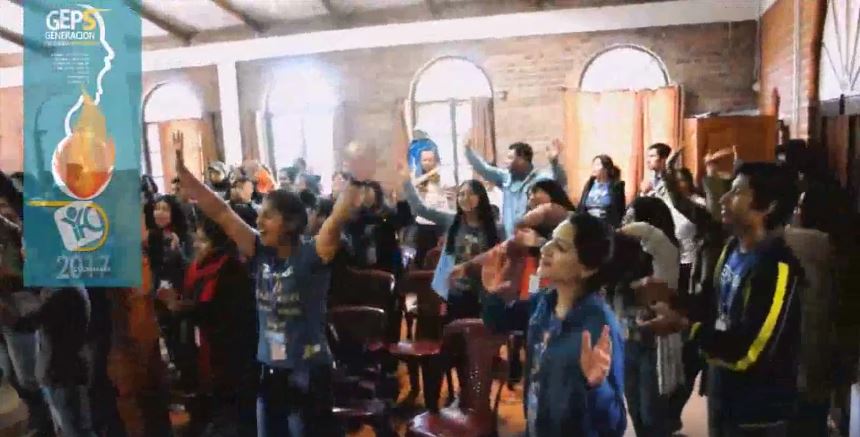
Because of you…
Youth for Christ’s ministry in Bolivia includes the use of television and radio, counseling, camps and conferences. Some of the key characteristics of the ministry are evangelistic events in town squares, radio, TV, camps, seminars, conferences, music trips, counseling, social involvement, training in colleges, workshops.
Prayer Needs
- Funding for full and part-time staff and other crucial ministry resources.
- Training school for leaders and trainers.
- Wisdom and continued spiritual growth of staff and volunteers as the ministry grows
About Bolivia
Bolivia
Introduction
Bolivia, named after independence fighter Simon BOLIVAR, broke away from Spanish rule in 1825; much of its subsequent history has consisted of a series of nearly 200 coups and countercoups. Democratic civilian rule was established in 1982, but leaders have faced difficult problems of deep-seated poverty, social unrest, and illegal drug production. In December 2005, Bolivians elected Movement Toward Socialism leader Evo MORALES president - by the widest margin of any leader since the restoration of civilian rule in 1982 - after he ran on a promise to change the country's traditional political class and empower the nation's poor, indigenous majority. However, since taking office, his controversial strategies have exacerbated racial and economic tensions between the Amerindian populations of the Andean west and the non-indigenous communities of the eastern lowlands. In December 2009, President MORALES easily won reelection, and his party took control of the legislative branch of the government, which will allow him to continue his process of change.
Geography
Location
Location: Central South America, southwest of Brazil
Geographic Coordinates: 17 00 S, 65 00 W
Area
Total Area: 1,098,581 sq km Rank: 28
Land Area: 1,083,301 sq km
Water Area: 15,280 sq km
Comparison: slightly less than three times the size of Montana
Land Boundaries: 6,940 km
Bordering Countries: Argentina 832 km, Brazil 3,423 km, Chile 860 km, Paraguay 750 km, Peru 1,075 km
Coastline: 0 km (landlocked)
Climate
varies with altitude; humid and tropical to cold and semiarid
Terrain
rugged Andes Mountains with a highland plateau (Altiplano), hills, lowland plains of the Amazon Basin
Elevations
Lowest Point: Rio Paraguay 90 m
Highest Point: Nevado Sajama 6,542 m
Natural Resources
tin, natural gas, petroleum, zinc, tungsten, antimony, silver, iron, lead, gold, timber, hydropower
Land Use
Arable land: 2.78%
Permanent Crops: 0.19%
Other: 97.03% (2005)
Irrigated Land: 1,320 sq km (2003)
Renewable Water Resources: 622.5 cu km (2000)
Total Freshwater withdrawal (domestic/industrial/agricultural): 1.44 cu km/yr (13%/7%/81%)
Freshwater Withdrawal Per Capita: 157 cu m/yr (2000)
Environment
Natural Hazards: flooding in the northeast (March-April)
Environmental Issues: the clearing of land for agricultural purposes and the international demand for tropical timber are contributing to deforestation; soil erosion from overgrazing and poor cultivation methods (including slash-and-burn agriculture); desertification; loss of biodiversity; industrial pollution of water supplies used for drinking and irrigation
Environmental Agreements: Party to: Biodiversity, Climate Change, Climate Change-Kyoto Protocol, Desertification, Endangered Species, Hazardous Wastes, Law of the Sea, Marine Dumping, Ozone Layer Protection, Ship Pollution, Tropical Timber 83, Tropical Timber 94, Wetlands
Geography Notes
landlocked; shares control of Lago Titicaca, world's highest navigable lake (elevation 3,805 m), with Peru
People
Population: 9,775,246 (July 2010 est.) Rank: 84
Age Structure
0-14 years: 35.5% (male 1,767,310/female 1,701,744)
15-64 years: 60% (male 2,877,605/female 2,992,043)
65 years and over: 4.5% (male 193,196/female 243,348) (2010 est.)
Median Age: 21.5 years
Population Growth
Growth Rate: 1.772% (2010 est.) Rank: 73
Birth Rate: 25.82 births/1,000 population (2010 est.) Rank: 66
Death Rate: 7.05 deaths/1,000 population (July 2010 est.) Rank: 130
Net Migration Rate: -1.05 migrant(s)/1,000 population (2010 est.) Rank: 118
Urbanization
Urban Population: 66% of total population (2008)
Rate of Urbanization: 2.5% annual rate of change (2005-10 est.)
Life and Death
Infant Mortality Rate: 44.66 deaths/1,000 live births Rank: 59
Life Expectancy at Birth: 66.89 years Rank: 156
Fertility Rate: 3.07 children born/woman (2010 est.) Rank: 66
Health and Disease
HIV/AIDS - Adult Prevalence Rate: 0.2% (2007 est.) Rank: 107
People living with HIV/AIDS: 8,100 (2007 est.) Rank: 112
HIV/AIDS Deaths: fewer than 500 (2007 est.) Rank: 84
Degree of Risk for Major Infectious Diseases: high
Food or waterborne diseases: bacterial diarrhea, hepatitis A, and typhoid fever
Vectorborne Diseases: dengue fever, malaria, and yellow fever
Water Contact Diseases: leptospirosis (2009)
Nationality and Culture
Noun: Bolivian(s)
Adjective: Bolivian
Ethnic Groups: Quechua 30%, mestizo (mixed white and Amerindian ancestry) 30%, Aymara 25%, white 15%
Religion: Roman Catholic 95%, Protestant (Evangelical Methodist) 5%
Languages: Spanish 60.7% (official), Quechua 21.2% (official), Aymara 14.6% (official), foreign languages 2.4%, other 1.2% (2001 census)
Education
Literacy (Meaning, age 15 and over can read and write): 86.7% Male: 93.1% Female: 80.7% (2001 census)
Education expenditures: 6.4% of GDP (2003) Rank: 32
Government
Country Name
Conventional Long Form: Plurinational State of Bolivia
Conventional Short Form: Bolivia
Local Long Form: Estado Plurinacional de Bolivia
Local Short Form: Bolivia
Government Type: republic; note - the new constitution defines Bolivia as a "Social Unitarian State"
Capital: La Paz (administrative capital) Geographic Coordinates: 16 30 S, 68 09 W
Note: Sucre (constitutional capital)
Administrative divisions
9 departments (departamentos, singular - departamento); Beni, Chuquisaca, Cochabamba, La Paz, Oruro, Pando, Potosi, Santa Cruz, Tarija
Independence: 6 August 1825 (from Spain)
National holiday: Independence Day, 6 August (1825)
Constitution: 7 February 2009
Legal system: based on Spanish law and Napoleonic Code; has not accepted compulsory ICJ jurisdiction; the 2009 Constitution incorporates indigenous community justice into Bolivia's judicial system
Suffrage: 18 years of age, universal and compulsory (married); 21 years of age, universal and compulsory (single)
Executive Branch
Chief of State: President Juan Evo MORALES Ayma (since 22 January 2006); Vice President Alvaro GARCIA Linera (since 22 January 2006); note - the president is both chief of state and head of government
Head of Government: President Juan Evo MORALES Ayma (since 22 January 2006); Vice President Alvaro GARCIA Linera (since 22 January 2006)
Cabinet: Cabinet appointed by the president
Elections: president and vice president elected on the same ticket by popular vote for a single five-year term; election last held on 6 December 2009 (next to be held in 2014); note - per the new constitution, presidents can serve for a total of two consecutive terms
Election Results: Juan Evo MORALES Ayma reelected president; percent of vote - Juan Evo MORALES Ayma 64%; Manfred REYES VILLA 26%; Samuel DORIA MEDINA Arana 6%; Rene JOAQUINO 2%; other 2%
Legislative Branch
bicameral Plurinational Legislative Assembly or Asamblea Legislativa Plurinacional consists of Chamber of Senators or Camara de Senadores (36 seats; members are elected by proportional representation from party lists to serve five-year terms) and Chamber of Deputies or Camara de Diputados (130 seats total; 70 uninominal deputies directly elected from a single district, 7 "special" indigenous deputies directly elected from non-contiguous indigenous districts, and 53 plurinominal deputies elected by proportional representation from party lists; all deputies serve five-year terms)
Elections: Chamber of Senators and Chamber of Deputies - last held on 6 December 2009 (next to be held in 2015)
Election Results: Chamber of Senators - percent of vote by party - NA; seats by party - MAS 26, PPB-CN 10; Chamber of Deputies - percent of vote by party - NA; seats by party - MAS 89, PPB-CN 36, UN 3, AS 2
Judicial branch
Supreme Court or Corte Suprema (judges elected by popular vote from list of candidates pre-selected by Assembly for six-year terms); District Courts (one in each department); Plurinational Constitutional Court (five primary or titulares and five alternate or suplente magistrates elected by popular vote from list of candidates pre-selected by Assembly for six-year terms; to rule on constitutional issues); Plurinational Electoral Organ (seven members elected by the Assembly and the president; one member must be of indigenous origin to six-year terms); Agro-Environmental Court (judges elected by popular vote from list of candidates pre-selected by Assembly for six-year terms; to run on agro-environmental issues); provincial and local courts (to try minor cases)
Politics
Political Parties and Leaders: Bolivia-National Convergence or PPB-CN [Manfred REYES VILLA]; Movement of Social Patriotic Union or Muspa [Ana Maria FLORES Sanzetenea]; Movement Toward Socialism or MAS [Juan Evo MORALES Ayma]; National Unity or UN [Samuel DORIA MEDINA Arana]; People or Gente [Roman LOAYZA]; People for Liberty and Sovereignty or Pulso [Alejo VELIZ]; Social Alliance or AS [Rene JOAQUINO]; Social Democratic Bolivia or BSD [Rime CHOQUEHUANCA]
Political pressure groups and leaders: Bolivian Workers Central or COR; Federation of Neighborhood Councils of El Alto or FEJUVE; Landless Movement or MST; National Coordinator for Change or CONALCAM; Sole Confederation of Campesino Workers of Bolivia or CSUTCB
Other: Cocalero groups; indigenous organizations (including Confederation of Indigenous Peoples of Eastern Bolivia or CIDOB and National Council of Ayullus and Markas of Quollasuyu or CONAMAQ); labor unions (including the Central Bolivian Workers' Union or COB and Cooperative Miners Federation or FENCOMIN)
International Organization Participation: CAN, FAO, G-77, IADB, IAEA, IBRD, ICAO, ICC, ICCt, ICRM, IDA, IFAD, IFC, IFRCS, ILO, IMF, IMO, Interpol, IOC, IOM, IPU, ISO (correspondent), ITSO, ITU, LAES, LAIA, Mercosur (associate), MIGA, MINUSTAH, MONUC, NAM, OAS, OPANAL, OPCW, PCA, RG, UN, UNASUR, UNCTAD, UNESCO, UNFICYP, UNIDO, Union Latina, UNMIL, UNMIS, UNOCI, UNWTO, UPU, WCO, WFTU, WHO, WIPO, WMO, WTO
Flag Description: three equal horizontal bands of red (top), yellow, and green with the coat of arms centered on the yellow band; red stands for bravery and the blood of national heroes, yellow for the nation's mineral resources, and green for the fertility of the land
Note: similar to the flag of Ghana, which has a large black five-pointed star centered in the yellow band; in 2009, a presidential decree made it mandatory for a so-called wiphala - a square, multi-colored flag representing the country's indigenous peoples - to be used alongside the traditional flag
Economy
Economy Overview: Bolivia is one of the poorest and least developed countries in Latin America. Following a disastrous economic crisis during the early 1980s, reforms spurred private investment, stimulated economic growth, and cut poverty rates in the 1990s. The period 2003-05 was characterized by political instability, racial tensions, and violent protests against plans - subsequently abandoned - to export Bolivia's newly discovered natural gas reserves to large northern hemisphere markets. In 2005, the government passed a controversial hydrocarbons law that imposed significantly higher royalties and required foreign firms then operating under risk-sharing contracts to surrender all production to the state energy company in exchange for a predetermined service fee. After higher prices for mining and hydrocarbons exports produced a fiscal surplus in 2008, the global recession in 2009 slowed growth. A decline in commodity prices that began in late 2008, a lack of foreign investment in the mining and hydrocarbon sectors, a poor infrastructure, and the suspension of trade benefits with the United States will pose challenges for the Bolivian economy in 2010.
Gross Domestic Product
GDP (purchasing power parity): $45.56 billion (2009 est.) Rank: 91
GDP - real growth rate: 3.3% (2009 est.) Rank: 57
GDP - per capita (PPP): $4,700 (2009 est.) Rank: 146
GDP - Composition by Sector: Agriculture: 11.3% Industry: 36.9% Services: 51.8% (2008 est.)
Labor Force
Labor Force: 4.534 million (2009 est.) Rank: 78
Labor force - by occupation: Agriculture: 40% Industry: 17% Services: 43% (2006 est.)
Unemployment Rate: 8.5% (2009 est.) Rank: 7.5% (2008 est.)
Note: data are for urban areas; widespread underemployment
Poverty
Population below poverty line: 60% (2006 est.)
Transnational Issues
International Disputes: Chile and Peru rebuff Bolivia's reactivated claim to restore the Atacama corridor, ceded to Chile in 1884, but Chile offers instead unrestricted but not sovereign maritime access through Chile for Bolivian natural gas and other commodities; an accord placed the long-disputed Isla Suarez/Ilha de Guajara-Mirim, a fluvial island on the Rio Mamore, under Bolivian administration in 1958, but sovereignty remains in dispute